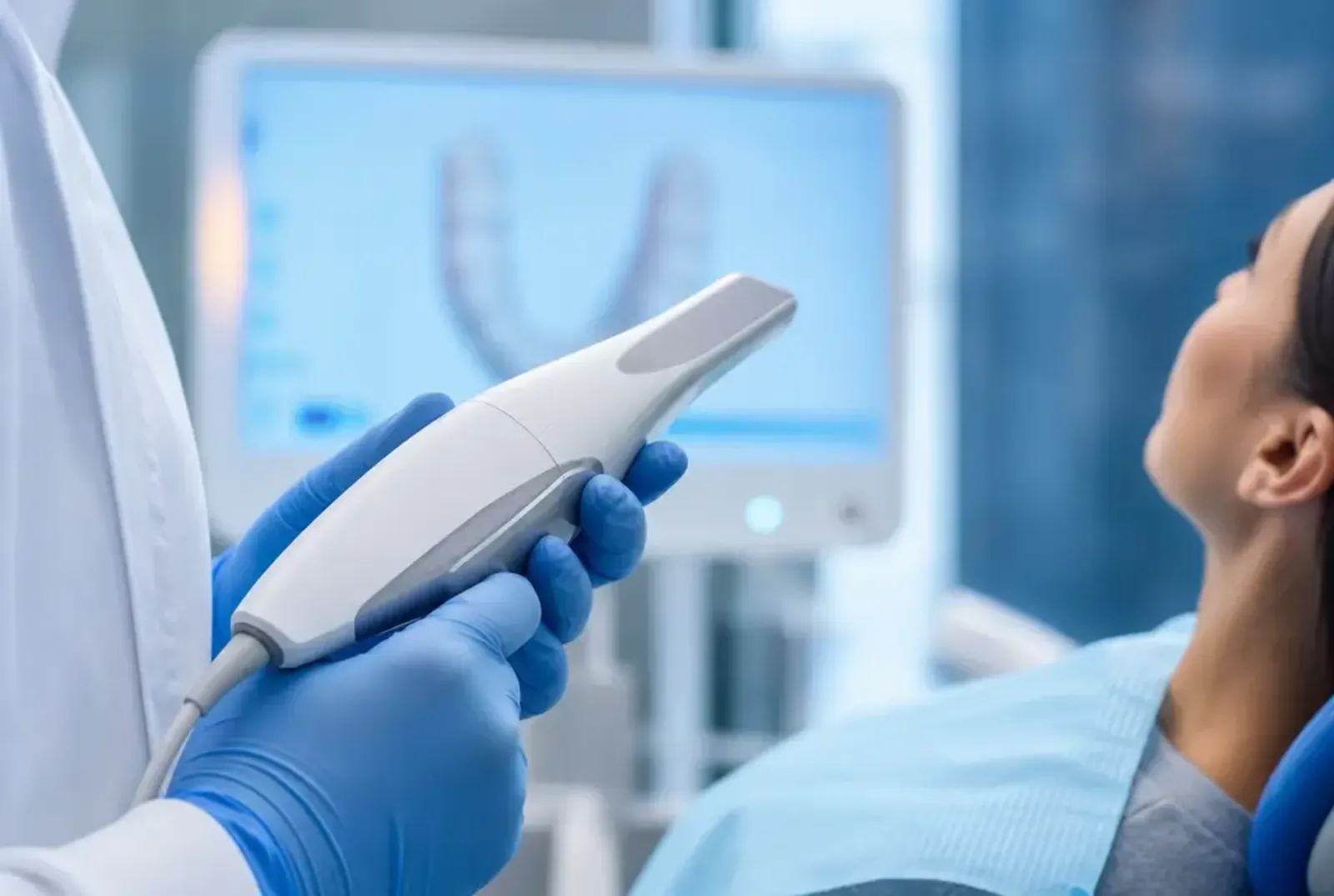
Intraoral scanning
A small wand maps your teeth in a few minutes. No trays, no putty, and the scan is what your crown, your aligners or your smile preview is built from.
Technology
Digital scanning replaces impression trays, our in-house mill finishes most crowns in a single afternoon, and low-dose 3D imaging means we plan implants before we ever pick up an instrument.
Why it matters
None of this is here for show. Each piece either removes a step you would rather skip — the tray of impression putty, the temporary crown, the second trip — or shows the dentist something before treatment starts instead of during it.
In the practice
A small wand maps your teeth in a few minutes. No trays, no putty, and the scan is what your crown, your aligners or your smile preview is built from.
Crowns are designed on the scan and milled here, usually within the same afternoon. No temporary, no second trip across town.
For implant planning and difficult extractions. The dentist sees the bone and the nerves before starting, and plans around them.
Before cosmetic work, you see the likely result on screen and choose together with the dentist — not from a catalogue.
What it does not change
A scanner and a mill make the visit shorter and the fit better. They do not make decisions. Every plan is still written down by the dentist, with its price, and nothing starts without your say-so.
A first visit takes about 75 minutes and ends with a written plan. Book online, or call the front desk.