DENTAL
✦FOUND · 6 MIN READ
Why you are not in the map pack, and what actually moves it
Local results are assembled from proximity, prominence, and relevance. One of those you cannot buy at any price. Here is the honest account of what a practice can genuinely influence, and what it cannot.
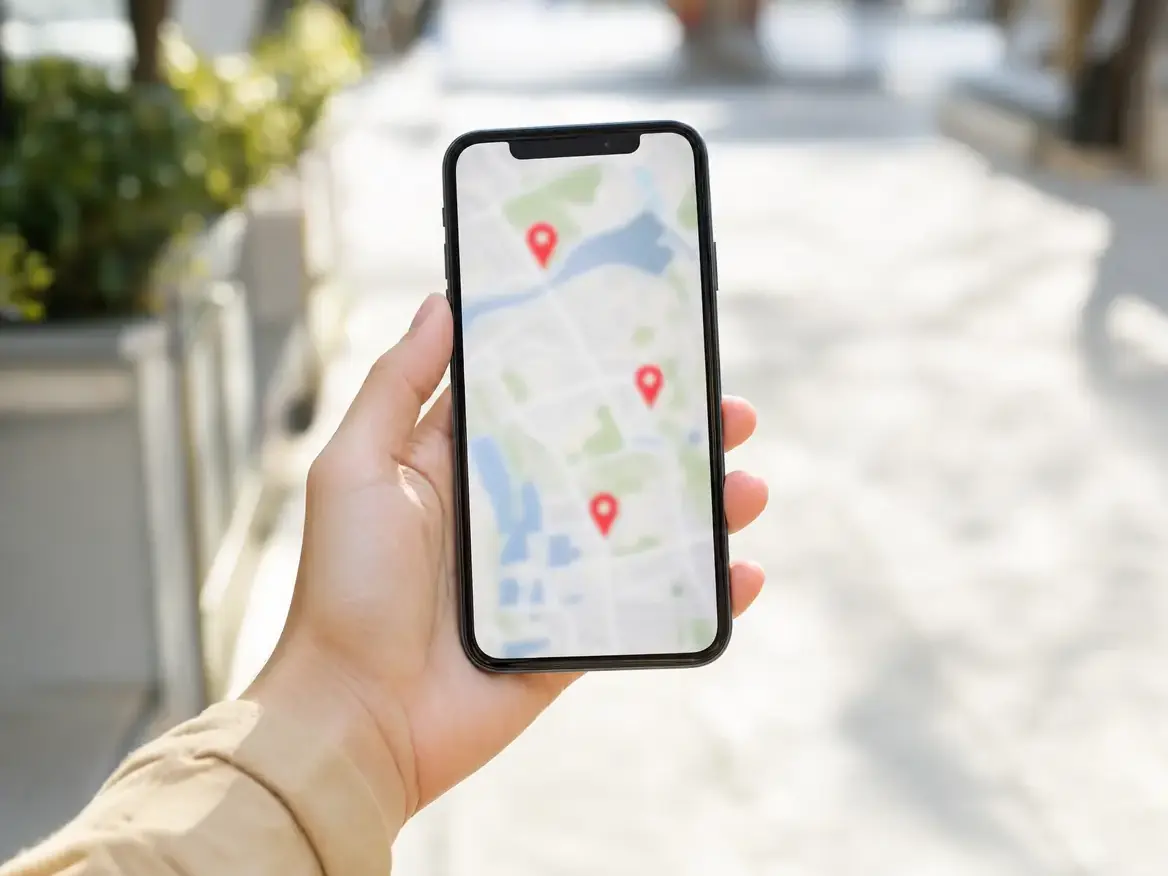
A woman is sitting in her car outside a grocery store on 86th Street with a molar that has been aching since Tuesday. She types "dentist near me" into her phone. Three practices come up on a small map, each with a star rating and a call button. She taps the second one. She never scrolls.
That block of three is the map pack — the local results Google places above the ordinary blue links. For a dental practice it is usually the most valuable piece of screen on the internet, because the person looking at it is nearby, uncomfortable, and ready to act right now.
If you are not in it, someone has probably already told you why, usually while selling you something. Here is the honest version, including the parts that are not flattering to agencies.
How those three results actually get chosen
Google describes local ranking as three factors: proximity, prominence, and relevance. That is not agency shorthand — it is the published framing, and it explains more than most of what gets written around it.
Proximity is how close you are to the person searching, at the moment they search. Not how close you are to downtown, or to the center of your city. Close to them, in that parking lot.
Prominence is how established and well regarded your practice appears to be — reviews, mentions, links, the general weight of evidence that you are a real practice people go to.
Relevance is how well your profile and your website match what was typed. "Emergency dentist" and "Invisalign" and "pediatric dentist" are three different questions, and Google answers them with three different sets of practices.
Everything a competent local program does sits inside one of those three. Everything a bad one does is either theater or a policy violation.
The part nobody wants to say out loud
Proximity carries a great deal of weight for a search like "dentist near me", and you cannot buy it. Your building is where it is. If a patient is standing four miles north of you and there are six practices between you and her, you are unlikely to appear in her three — no matter how good your marketing is, and no matter what anyone charges you for it.
This is why ranking reports are so often misleading. Ask ten people in ten different parts of the county to search the same phrase and you will get ten different maps. A practice can be first for a whole neighborhood and invisible three exits up the interstate. When someone shows you a screenshot proving you are number one, the honest question is: number one standing where?
No one can promise you a map position, because the map changes with every person who opens it. What can be promised is the work — and the work genuinely does widen the area you win inside.
So the realistic goal is not to rank everywhere. It is to own the area you can plausibly own, and to be the obvious choice inside it.
Against the thing an agency would normally sell you here
The standard upsell at this point is citations, sold by volume. Three hundred directory listings. Five hundred. A monthly fee to keep adding more.
We do not believe in it and we will not sell it. Listings matter, but not as a quantity. What matters is that your name, address, and phone number are identical everywhere they already appear, that the wrong ones are corrected, and that duplicates are merged or removed. That is unglamorous, finite work: find every listing, fix it, then watch it. It ends. A practice with one clean, consistent set of facts across the places patients and Google actually check is in better shape than a practice with four hundred listings, three phone numbers, and a suite number that changed years ago.
Two more things get sold and should not be. Stuffing keywords into your business name — "Smith Family Dentistry Emergency Dentist Indianapolis" — is against Google's guidelines and is one of the easiest things in the world for a competitor to report. And renting a mailbox or a virtual office to fake proximity into a neighboring suburb is not a strategy; it is a suspension waiting to happen, and it can take your real listing down with it.
What genuinely moves it
Almost all of it lives in prominence and relevance, and almost all of it is boring.
- Your primary category. One field, considerable weight. A general practice filed under a specialty category, or a specialist filed as "Dentist", is competing for the wrong searches. Secondary categories should be true, not aspirational.
- Services and description on the profile itself. If you place implants, the profile should say so in its own words, not only your website.
- A steady flow of reviews, and replies to them. Not a burst before a slow month. Steady. Every review answered, including the difficult ones, in language that never discloses anything about a patient's treatment.
- Real photographs of your actual practice. Your team, your operatories, your front door as it looks from the sidewalk. Stock photography of a stranger's clinic tells a patient nothing.
- Hours that are correct, holidays included. A patient who drives to a closed office writes a review about it.
- A website that supports the profile. Pages that genuinely cover the treatments you want to be found for, your address and phone in text on the page, and a site that loads quickly on a phone on cellular data.
- What happens after the tap. Calls answered, forms that work, a booking path that does not assume a desktop. None of this moves a map position directly. It is the only reason the position was worth having.
What to check on your own site and profile today
None of this needs an agency. Twenty minutes, your phone, and a notepad.
- Search your practice name in a private browsing window. Is there more than one listing for you? Is there an old one at a previous address?
- Open your Google Business Profile and read the primary category out loud. Would a patient looking for you type that word?
- Compare the phone number on your profile against your website footer, your Facebook page, and your Yelp entry. Character for character.
- Look at the last photo added to your profile. If you cannot remember the year it was taken, that is your answer.
- Read your three most recent reviews. Are they answered? Was the newest one answered within a week?
- Load your homepage on your own phone, off wi-fi. Count the seconds until you can read something.
- Tap your own phone number on that page. Does it dial?
- Check your holiday hours for the next two months. Set them now, not the morning of.
- Ask your front desk what callers say. "I found you on Google" and "my neighbor sent me" are two different problems, and they need two different fixes.
What to expect once you have fixed all of it
Movement in local results is slow and uneven. Categories and hours can register quickly. Reviews and consistency compound over months. Google reshapes local results on its own schedule and tells nobody in advance, so there will be weeks where you lose ground for reasons that have nothing to do with anything you did.
The practices that win their radius treat this as maintenance rather than a campaign — a profile kept accurate, reviews asked for every week, photographs refreshed when the office changes, listings watched rather than bought. It is not exciting work. It is just the work, and it is the only part of this that is genuinely yours to control.
If you want a second pair of eyes on your profile and your site before you change anything, the free Practice Growth Blueprint reads both and sends back what we find, with no sales call required.